Contact us today!
404.745.9561

Figs & Honey Blog
The Ultimate Guide to Sustainable Catering: Everything You Need for Eco-Friendly Events
Planning an eco-friendly event doesn’t mean compromising on delicious food or memorable experiences. With a thriving local food scene and growing environmental consciousness, sustainable catering has become more accessible and impressive than ever before. Whether you’re organizing a corporate gathering, wedding, or special celebration, you can create an event that delights your guests while supporting local farmers and protecting our planet.
The key is understanding what sustainable catering truly means and knowing how to partner with the right professionals who share your environmental values. Let’s dive into everything you need to know about creating an unforgettable, eco-conscious event.
Why Sustainable Catering Matters
Sustainable catering makes a meaningful difference for both your event and the environment. When you choose eco-friendly catering, you’re not just reducing your environmental impact: you’re supporting local farmers, reducing transportation emissions, and often getting fresher, more flavorful ingredients that showcase the best of what our region has to offer.
Local sourcing forms the backbone of sustainable catering. When your caterer sources ingredients within a day’s drive of your event, you’re automatically reducing the carbon footprint associated with long-distance transportation. Plus, locally-sourced produce is typically harvested at peak ripeness, meaning better flavor and nutrition for your guests.
The environmental benefits extend far beyond just food sourcing. Sustainable catering practices include waste reduction strategies, energy-efficient preparation methods, and thoughtful packaging choices that minimize single-use plastics and non-recyclable materials.
Choosing the Right Sustainable Caterer
Finding a caterer who truly embraces sustainability requires looking beyond marketing buzzwords to examine their actual practices and values. Start by asking potential caterers specific questions about their sourcing relationships, waste management procedures, and environmental certifications.
Look for established track records rather than newcomers making sustainability promises. Caterers who have been practicing farm-to-table sourcing for decades (like companies with 30+ years of experience) have refined their processes and built strong relationships with local producers. These established partnerships ensure consistent access to high-quality, sustainable ingredients.
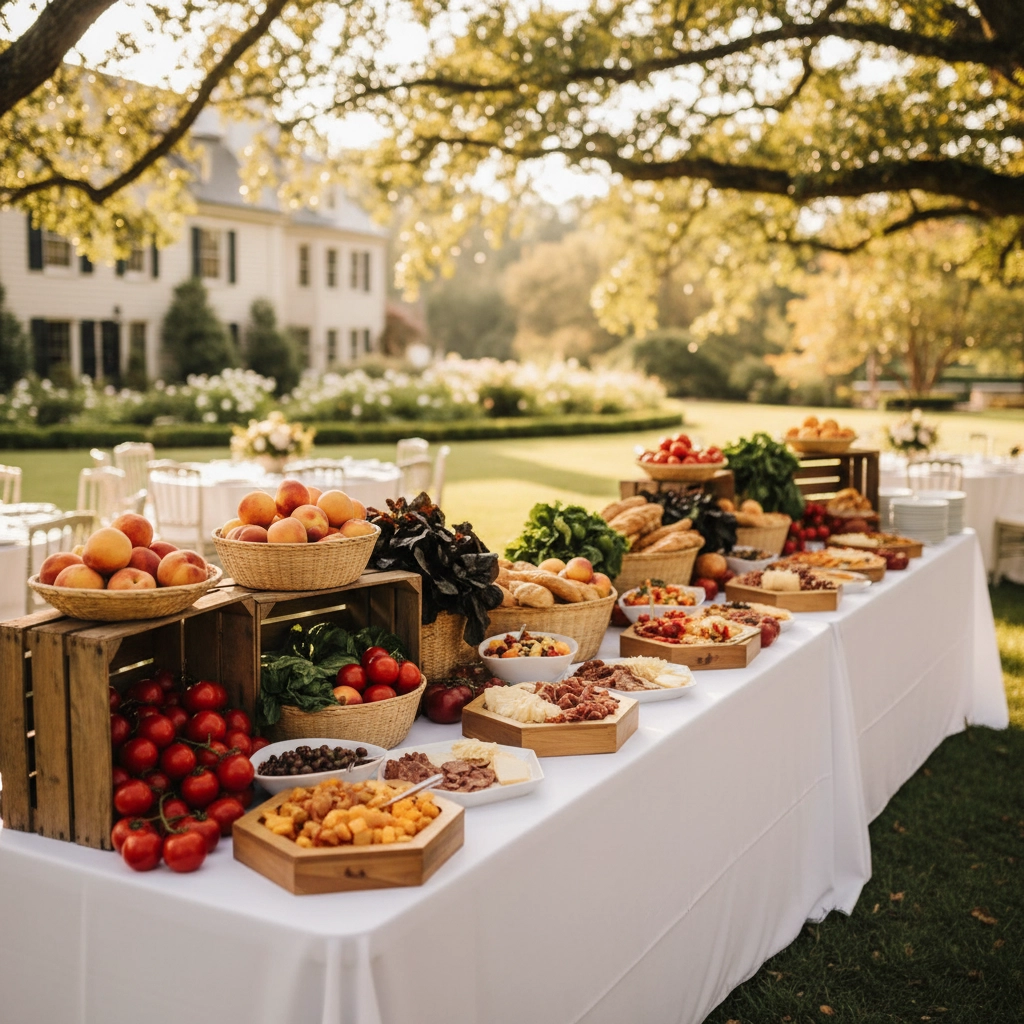
Ask about certifications and partnerships. Reputable sustainable caterers often hold Green Business Certification, participate in local food networks, or maintain partnerships with specific farms and producers they can name. They should be able to tell you exactly where your ingredients are coming from and why they’ve chosen those particular sources.
Don’t forget to inquire about their waste management philosophy. Top sustainable caterers track their waste data, implement comprehensive recycling and composting systems, and often partner with local food banks to donate edible leftovers rather than sending them to landfills.
Planning Your Eco-Friendly Menu
Creating a sustainable menu that impresses your guests starts with embracing seasonal availability. Georgia’s growing seasons offer incredible variety throughout the year: from spring’s fresh greens and berries to summer’s abundant tomatoes and peaches, fall’s apple and sweet potato harvests, and winter’s hearty root vegetables and preserved goods.
Seasonal menu planning not only reduces environmental impact but often results in more affordable and flavorful options. When ingredients are in peak season locally, they’re typically at their best price point and highest quality. Work with your caterer to design menus that celebrate what’s available right now rather than forcing out-of-season items that require long-distance shipping.
Plant-forward options deserve prominent placement on your sustainable menu. This doesn’t mean eliminating meat entirely, but rather featuring vegetables, grains, and legumes as stars rather than sides. Many guests today actively seek plant-based options, and creative vegetarian dishes often become the most talked-about items at events.
When you do include animal proteins, prioritize locally-raised, sustainably-produced options. Georgia’s pasture-raised beef, free-range poultry, and sustainably-caught seafood from the Georgia coast offer delicious alternatives to factory-farmed proteins.
Sustainable Operations and Practices
The sustainability of your event extends far beyond just the ingredients on your menu. Energy-efficient preparation methods and equipment choices can significantly reduce your event’s environmental impact. Many sustainable caterers use energy-efficient cooking techniques, LED lighting, and optimized transportation routes to minimize their carbon footprint.
Water conservation plays a crucial role in sustainable catering operations. Look for caterers who use water-efficient practices in food preparation and cleanup, and consider serving water in pitchers or dispensers rather than individual bottles. This simple change can eliminate hundreds of single-use plastic bottles from a single event.
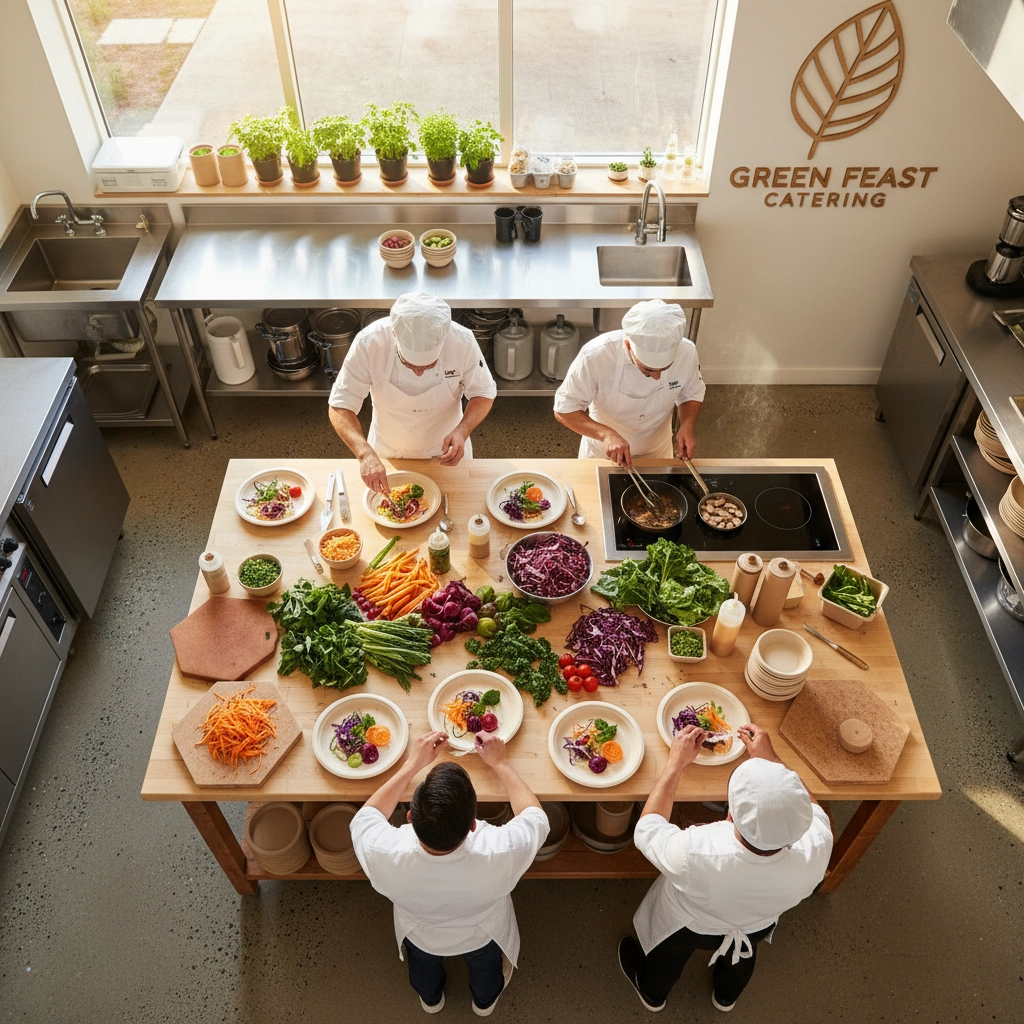
Packaging and serving ware choices make a visible difference to your guests and the environment. Opt for reusable plates, glasses, and silverware when possible, or choose compostable alternatives made from renewable materials like bamboo or palm leaves. Many sustainable caterers now offer elegant compostable options that look and feel just as upscale as traditional disposables.
Transportation sustainability encompasses both ingredient sourcing and event logistics. Choose venues that are accessible by public transportation or encourage carpooling among guests. Some caterers optimize their delivery routes and use fuel-efficient vehicles to reduce transportation emissions.
Engaging Your Guests in Sustainability
Your guests can become active participants in your event’s sustainability efforts when you provide clear information and easy ways to contribute. Educational signage can highlight your eco-friendly choices without being preachy: simple notes about local sourcing, composting stations, or energy-efficient practices help guests understand and appreciate your environmental commitment.
Interactive sustainability elements can actually enhance the guest experience. Consider a “meet the farmer” station with information about local producers, or provide reusable containers for guests to take home leftovers. These touches show thoughtfulness while reducing waste.
Make participation convenient and obvious. Clearly marked recycling and composting stations, water refill stations, and instructions for reusable serving ware help guests participate without confusion. When sustainability is easy, people are much more likely to embrace it enthusiastically.
Working with Local Producers and Vendors
Building relationships with local producers creates opportunities for truly unique and sustainable event experiences. Many local farms offer tours, tastings, or even on-site event hosting that can add special touches to your gathering while supporting local agriculture directly.
Seasonal partnerships with local producers can result in menu items that truly showcase the best of Georgia’s agricultural offerings. Imagine serving peach-inspired desserts made with fruit picked that same week, or featuring heirloom tomatoes from a nearby farm.
Artisanal local vendors for beverages, baked goods, or specialty items add authenticity to your sustainable event. Georgia’s craft brewery scene, local distilleries, and artisanal food producers offer unique options that reduce transportation emissions while providing conversation starters for your guests.
Making It Happen: Your Action Plan
Start your sustainable catering journey by defining your environmental priorities early in the planning process. Are you most concerned about carbon footprint reduction, supporting local agriculture, minimizing waste, or all of the above? Clear priorities help you communicate effectively with potential caterers and make decisions that align with your values.
Research and interview multiple caterers who claim sustainable practices, but dig deeper than surface-level claims. Ask for specific examples of their environmental initiatives, request references from recent clients who prioritized sustainability, and inquire about their measurement and improvement processes.
Plan your timeline to accommodate seasonal sourcing and sustainable practices. Sustainable catering often requires more advance planning than conventional options, especially if you want to incorporate specific local ingredients or coordinate with particular farms’ harvest schedules.
Communicate your expectations clearly to all vendors, not just your caterer. Your florist, rental company, and venue should all understand your sustainability goals so they can support your efforts rather than undermine them.
The beauty of sustainable catering lies in how it enhances rather than restricts your event possibilities. When you partner with experienced sustainable caterers who understand both environmental responsibility and exceptional hospitality, you create events that satisfy your guests’ palates while reflecting your values and supporting your community.
Your commitment to sustainable catering sends a powerful message about your priorities while contributing to a more environmentally conscious event industry. You’ll find that choosing sustainability often means choosing the most creative, flavorful, and memorable catering options available. The planet: and your guests( will thank you for it!)










Never Miss A Blog Post!
404.745.9561 | info@figsandhoneycatering.com
2911 Pharr Ct. South NW, Atlanta, GA 30305
Office Hours Monday - Friday 9:00 am - 5:00 pm